
News - Instytut Studiów Europejskich
News
News
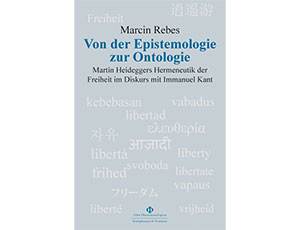
Von der Epistemologie zur Ontologie: Martin Heideggers Hermeneutik der Freiheit im Diskurs mit Immanuel Kant, Marcin Rebes, Königshausen & Neumann, Würzburg 2023
Read More o Von der Epistemologie zur Ontologie: Martin Heideggers Hermeneutik der Freiheit im Diskurs mit Immanuel Kant, Marcin Rebes, Königshausen & Neumann, Würzburg 2023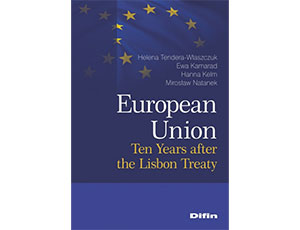
Tendera-Właszczuk Helena, Kamarad Ewa, Kelm Hanna, Natanek Mirosław, European Union : ten years after the Lisbon Treaty, Difin Eds, Warszawa, 2020
10 years have passed since the entry into force of the Lisbon Treaty. Referring to this anniversary, four researchers form Cracow University of Economics, Jagiellonian University and University of Economics in Katowice have undertaken an attempt to summarize the most important changes that took place in the last decade in the European Union.
Read More o Tendera-Właszczuk Helena, Kamarad Ewa, Kelm Hanna, Natanek Mirosław, European Union : ten years after the Lisbon Treaty, Difin Eds, Warszawa, 2020

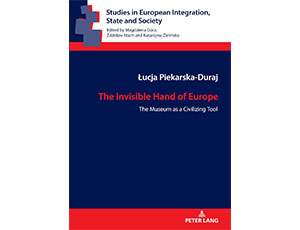
Piekarska Łucja, The Invisible Hand of Europe. The Museum as a civilizing Tool. Berlin-Warszawa: Peter Lang, 2020
The book offers an interpretive approach to the Europeanization of heritage as found in museums. In order to make the analysis of museum diversity feasible, the research proposed and applied an analytical framework. Some general remarks conclude the work, which aims to map both the timeless and current phenomena of European identity construction.
Read More o Piekarska Łucja, The Invisible Hand of Europe. The Museum as a civilizing Tool. Berlin-Warszawa: Peter Lang, 2020
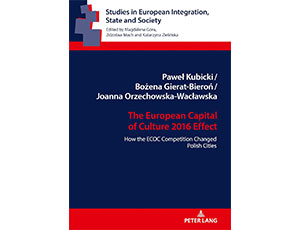
Kubicki Paweł, Gierat-Bieroń Bożena, Orzechowska-Wacławska Joanna, The European Capital of Culture 2016 effect: how the ECOC competition changed Polish cities, Berlin-Warszawa: Peter Lang, 2020
The European Capital of Culture is one of the European Union’s most important cultural programmes, its significance transcending a narrow understanding of the cultural sphere. The scheme has been one of the foremost mechanisms contributing to the urban revival of European cities and increasingly close integration in many areas of social and cultural activity. The ECOC 2016 competition (2007-2011), entered by 11 Polish cities, took place in an exceptionally favourable context.
Read More o Kubicki Paweł, Gierat-Bieroń Bożena, Orzechowska-Wacławska Joanna, The European Capital of Culture 2016 effect: how the ECOC competition changed Polish cities, Berlin-Warszawa: Peter Lang, 2020